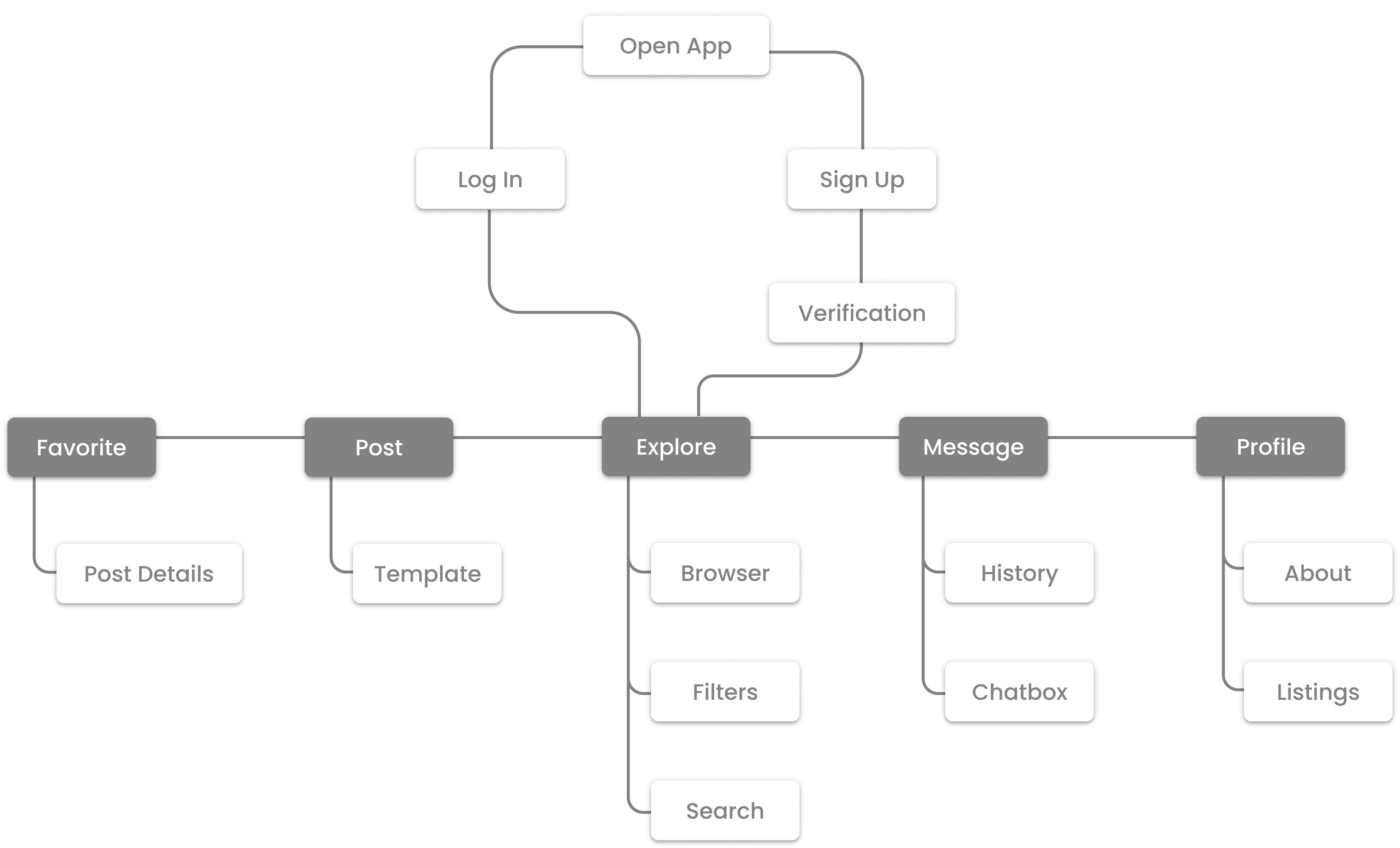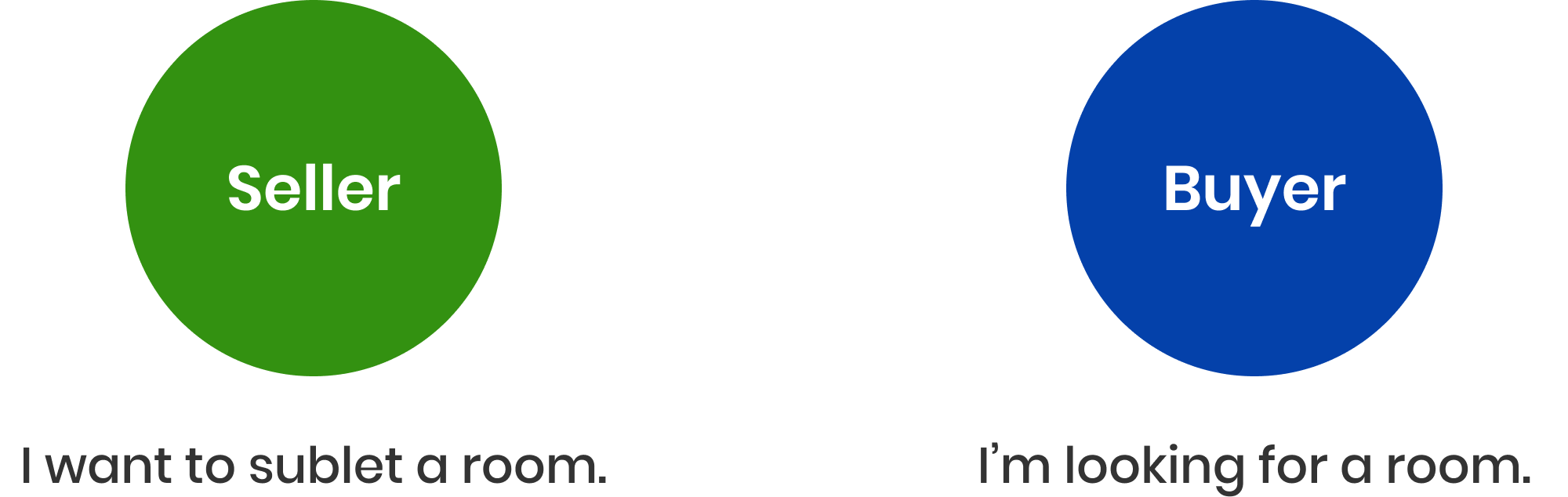
Subletting and renting rooms is always a heated topic in the UW-Madison community. To bridge sellers and buyers, we designed a subletting platform assisting students to exchange information related to subletting their current housing or finding a new place to live temporarily.
It’s common that students need to leave campus for a short time (i.e. summer internship). A lot of money will be wasted if they can’t find others to pay the rents for them. However, finding satisfactory buyers can be challenging because of the exhaustive process of advertising rooms, bargaining with strangers, etc.
On the other side, there are many people come to campus for a short time (i.e. exchange students). But finding a place to live temporarily is usually a pain since they might not have effective channels to connect with local sellers and most campus landlords are not willing to sign short-term leases.
How might we help students to sublet their vacant rooms?
How might we help people to find a temporary place to live?
To better understand the problems, we interviewed 10 students about challenges they had encountered during the subletting process. In the meanwhile, we also asked them to show us the steps they would take if they were going to sublet or look for rooms.
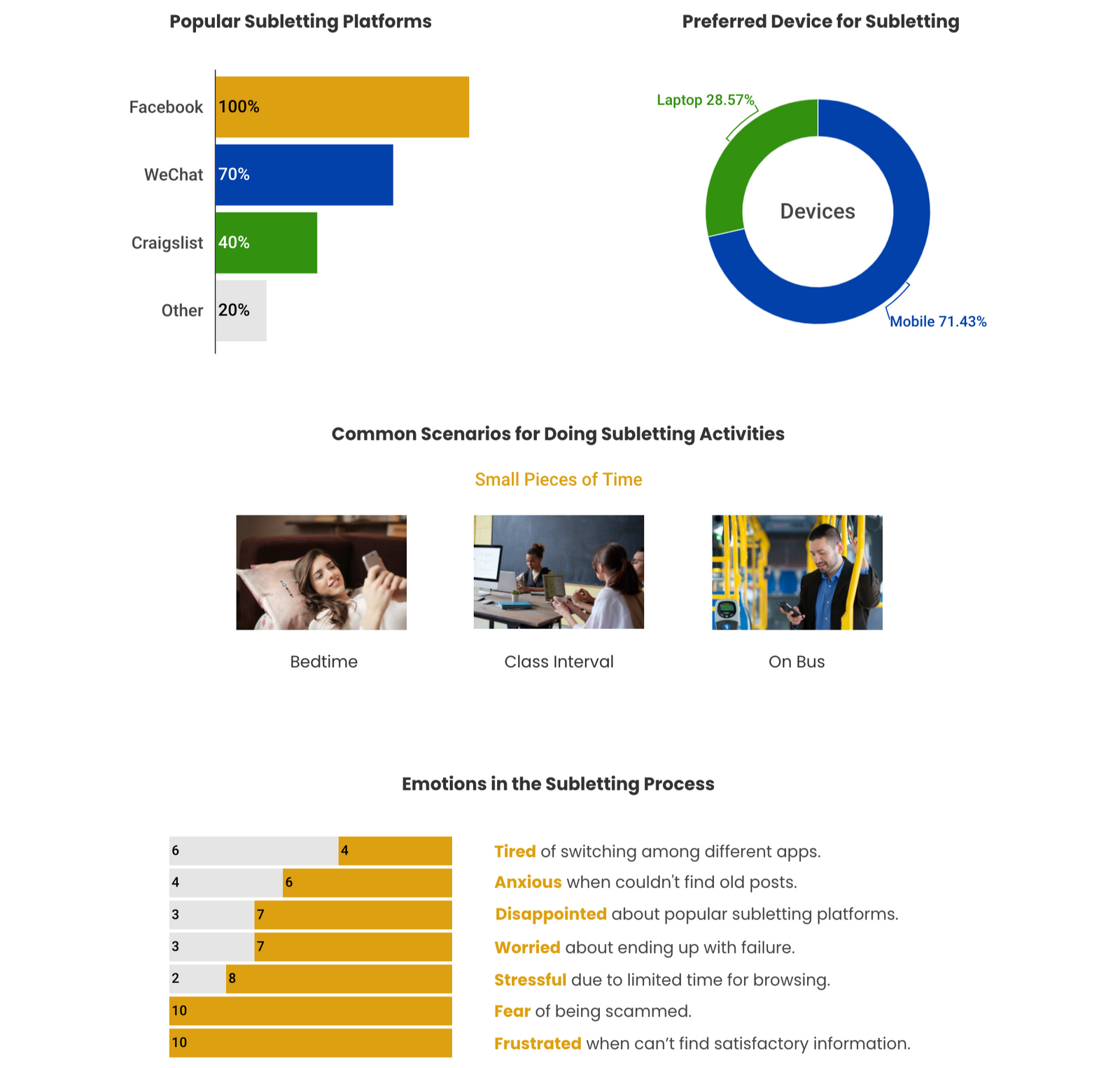
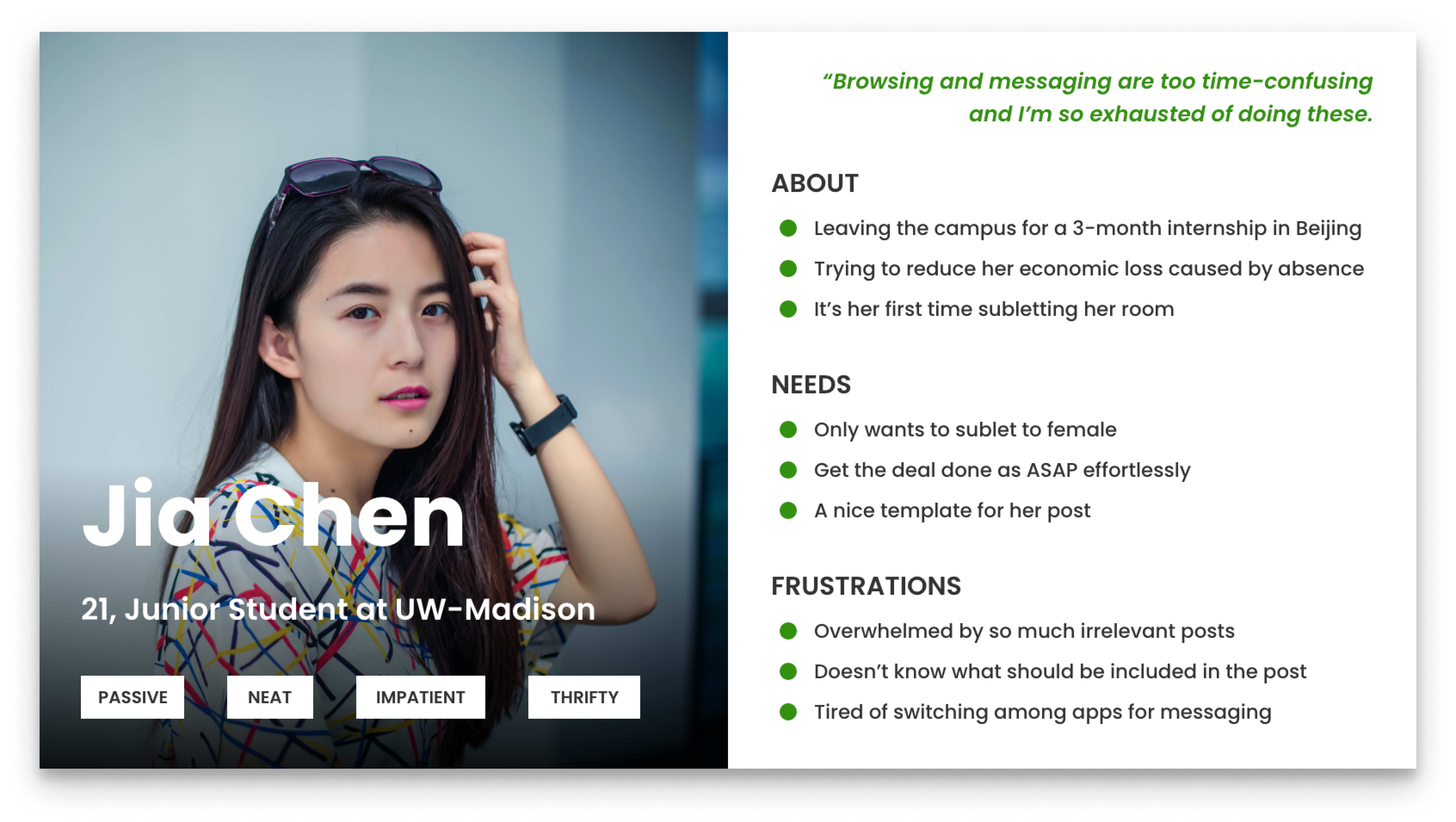
People spend too much time on useless browsing, messaging, posting and reposting. They usually check the updates in small chunk of time, like on bus, between classes, etc.
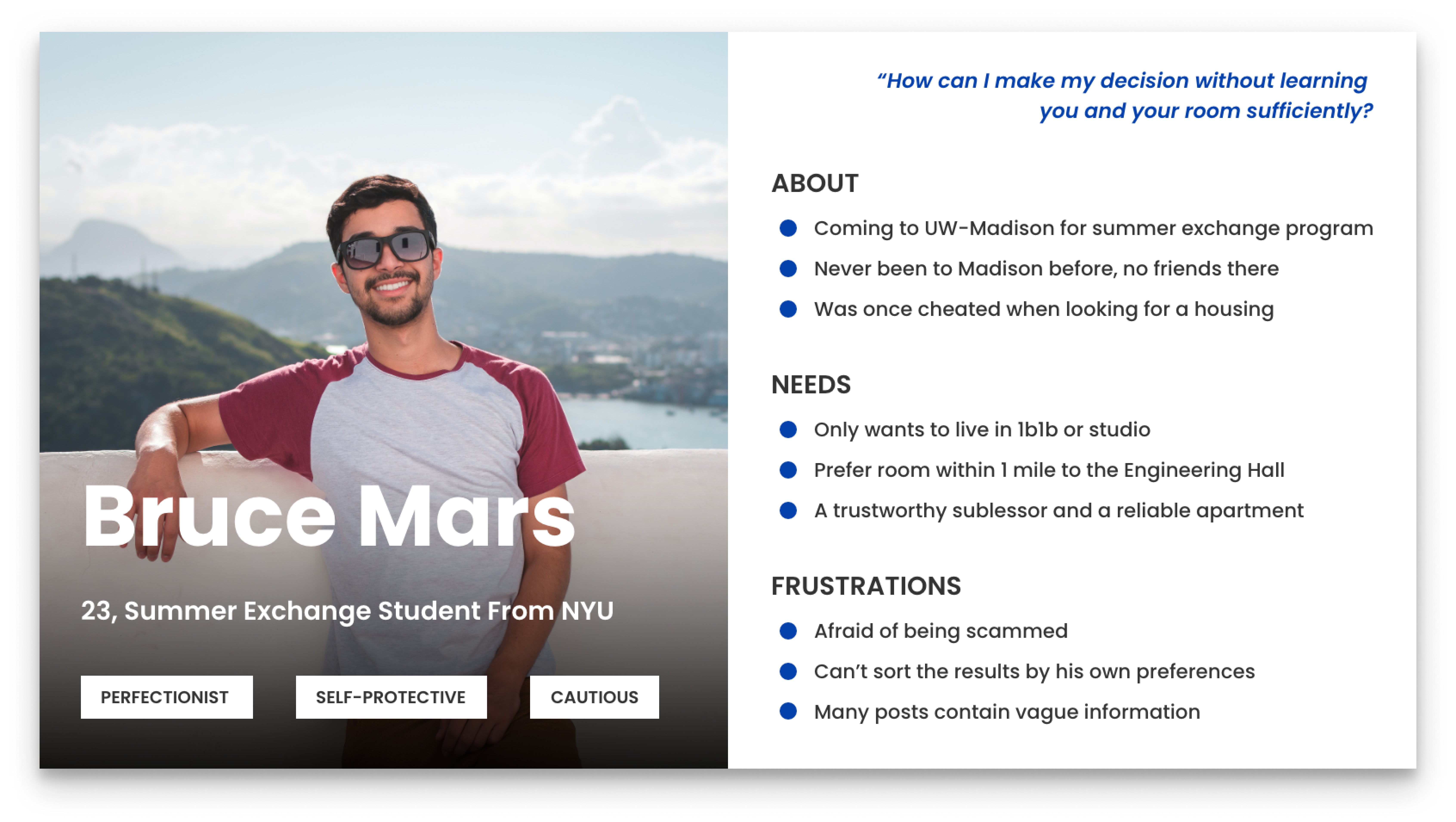
People are afraid of being scammed so that they would check the background of the seller/buyer by viewing their social media profiles, asking for more evidences, etc.
People are not sure what should be put into their posts, and may forget to include important information. But they always want to see clear and sufficient information in other people’s posts.
Different people have various preferences on selecting rooms or choosing who will be living in their rooms. However, they rarely can limit what to view and filter out irrelevant information.
Build a trustworthy online subletting community where people can filter information efficiently in fragments of time and get guidances when publishing their own needs.
Based on the synthesis results, we wrote down all the possible choices and crossing out impractical ideas. At last, we got 6 key features to solve the 4 main pain points.